

Struggling with lukewarm showers or a sudden loss of hot water can leave any Gold Coast household in a scramble for quick fixes. When your hot water system acts up, the impact on daily routines is immediate, and safety risks like scalding become an urgent concern. With practical guidance on safe troubleshooting steps and early warning signs, you can confidently tackle common problems and get your hot water running smoothly again.
Table of Contents
- Step 1: Gather Essential Tools And Safety Gear
- Step 2: Identify Common Hot Water System Warning Signs
- Step 3: Inspect Plumbing Connections And Power Supply
- Step 4: Test Heating Elements And Thermostat Functionality
- Step 5: Flush The Tank And Check For Sediment Build-Up
- Step 6: Verify Restored Hot Water Flow And Temperature
Quick Summary
| Essential Insight | Clear Explanation |
|---|---|
| 1. Gather essential tools and gear | Proper tools and personal protective equipment are crucial for safely troubleshooting a hot water system. |
| 2. Identify common warning signs | Recognising signs like temperature fluctuations and leaks can prevent costly repairs and unsafe situations. |
| 3. Conduct thorough inspections | Inspect plumbing connections and electrical components to identify potential issues before they escalate. |
| 4. Test heating elements and thermostat | Regular testing ensures components function correctly, maintaining system efficiency and safety. |
| 5. Flush the tank regularly | Annual flushing removes sediment build-up, improving performance and extending the system’s lifespan. |
Step 1: Gather essential tools and safety gear
Before diving into hot water system troubleshooting, you’ll need to gather the right equipment to ensure a safe and efficient diagnostic process. The key is being prepared with both technical tools and personal protective gear to handle potential challenges safely and effectively.
Start by assembling a comprehensive toolkit that includes:
- Adjustable wrench for tightening and loosening connections
- Multimeter for electrical testing and diagnostics
- Insulated screwdrivers with rubber grips
- Protective safety glasses to shield your eyes
- Insulated electrical gloves for electrical work
- Torch or headlamp for examining dark or tight spaces
Following safe plumbing work protocols, it’s crucial to prioritise personal safety before beginning any hot water system investigation. Your protective equipment isn’t just recommended – it’s essential for preventing potential injuries.
Safety isn’t an option. It’s a necessity when working with hot water systems.
Before starting, ensure you have a clear workspace and all your tools are in good condition. Check that electrical tools are properly insulated and free from damage. If you’re unsure about any aspect of the troubleshooting, consulting a professional plumber is always the safest approach.
Pro Tip: Always keep a first aid kit nearby and ensure you have a clear understanding of emergency procedures before commencing any technical work.
Step 2: Identify common hot water system warning signs
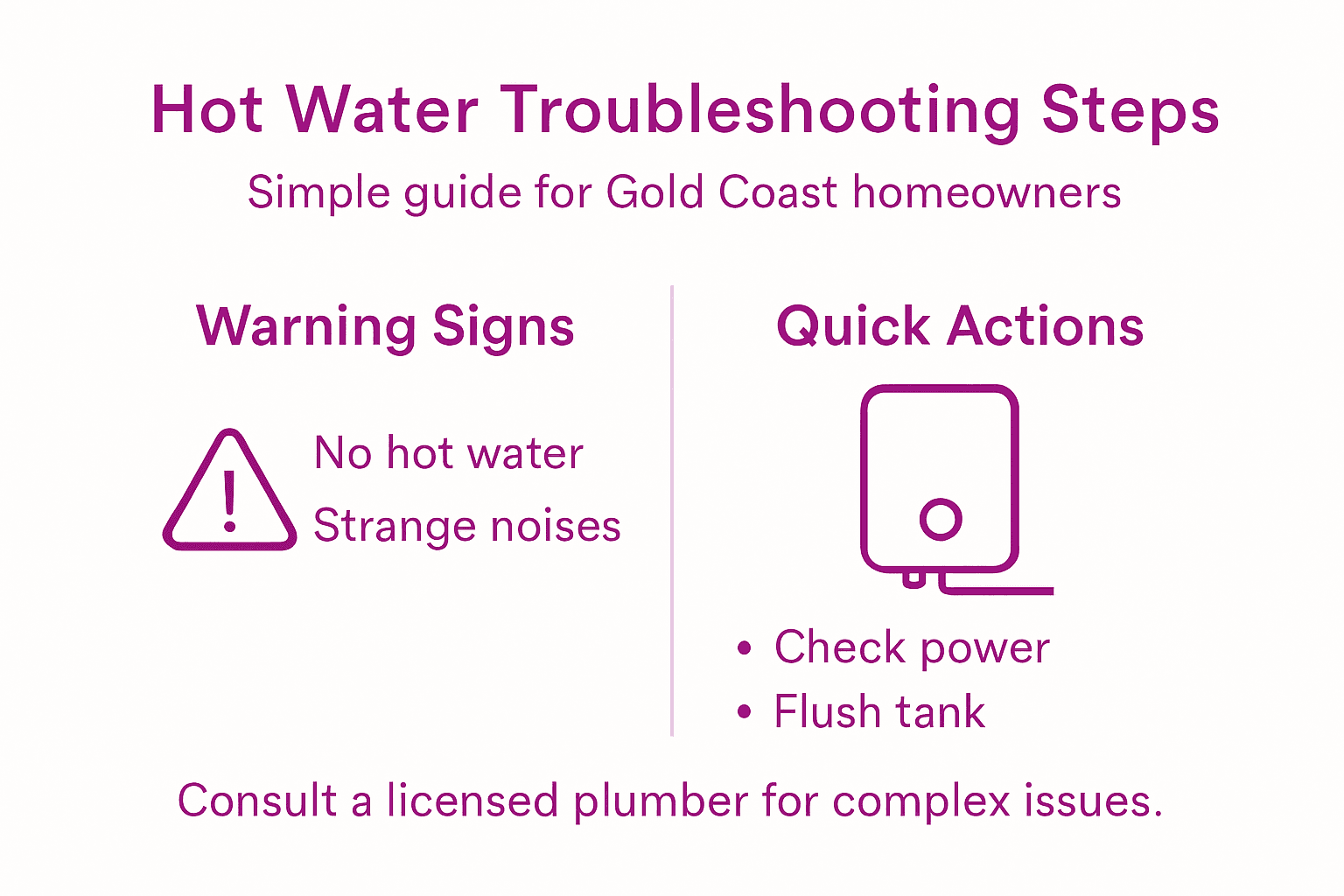
Recognising early warning signs can save you from costly repairs and potential safety risks with your hot water system. Understanding these indicators helps you catch problems before they escalate into major issues that could disrupt your household’s hot water supply.
Watch out for these critical warning signs:
- Inconsistent water temperature fluctuating between hot and cold
- Unusual noises like rumbling, popping, or crackling from the system
- Excessive water temperatures that might cause scalding
- Visible leaks around the tank or connecting pipes
- Reduced hot water flow or complete loss of hot water
- Rusty or discoloured water when running hot taps
Pay special attention to temperature-related risks. Hot water safety guidelines recommend maintaining water temperatures that prevent scalding while ensuring effective system performance.
Here’s a quick reference of warning signs, possible causes, and suggested actions for hot water system issues:
| Warning Sign | Possible Cause | Suggested Action |
|---|---|---|
| Water temperature fluctuates | Thermostat fault or sediment build-up | Test thermostat, flush tank |
| Unusual system noises | Sediment accumulation or heating element fault | Flush tank, inspect element |
| Visible leaks | Corroded fittings or tank | Inspect and replace fittings |
| Rusty or discoloured water | Internal tank corrosion | Consult a plumber for inspection |
| Reduced hot water flow | Pipe blockage or valve issue | Check valves, clear blockage |
Detecting warning signs early can prevent expensive repairs and potential safety hazards.
If you notice multiple symptoms or are unsure about the system’s condition, it’s crucial to consult a professional plumber who can provide a comprehensive assessment and recommend appropriate solutions.
Pro Tip: Keep a maintenance log documenting any observed issues to help professionals diagnose problems more quickly during service visits.
Step 3: Inspect plumbing connections and power supply
Conducting a thorough inspection of your hot water system’s plumbing connections and power supply is crucial for identifying potential issues before they become major problems. This step requires careful examination of both mechanical and electrical components to ensure safe and efficient operation.
Begin your inspection with these key areas:
- Check water pipe connections for any signs of corrosion or leakage
- Examine valve conditions and ensure they move smoothly
- Inspect electrical connections for any loose or damaged wiring
- Test circuit breakers related to the hot water system
- Look for visible wear on pipe joints and fittings
- Verify proper electrical earthing
Australian plumbing standards recommend a systematic approach to system inspection, focusing on material integrity and installation compliance. Pay special attention to areas where water and electricity intersect, as these can pose significant safety risks.
Careful inspection today can prevent costly repairs and dangerous failures tomorrow.
When examining electrical components, ensure the power is switched off at the main switchboard before conducting any detailed checks. If you’re uncomfortable with electrical work or notice any significant issues, it’s best to contact a licensed electrician or plumber for a professional assessment.
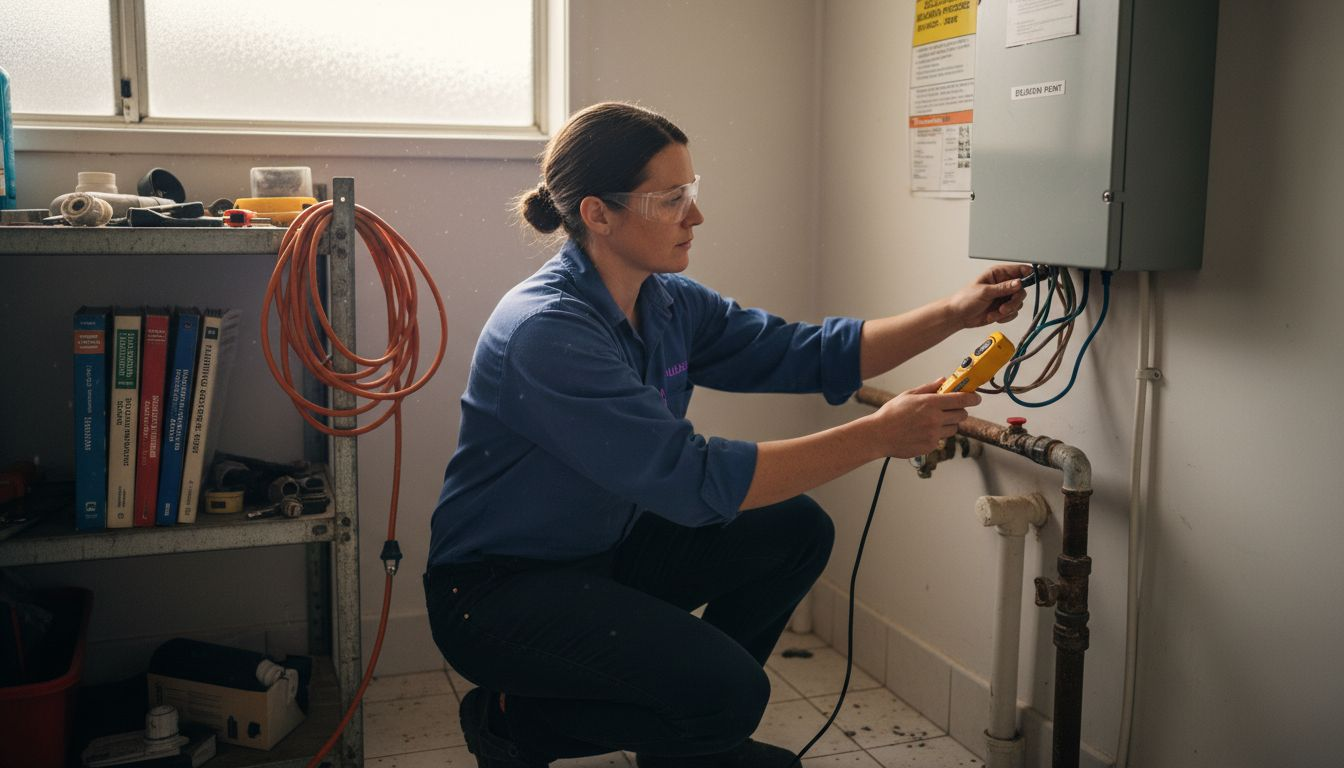
Pro Tip: Always use a non-contact voltage tester to confirm electrical circuits are dead before beginning any inspection work.
Step 4: Test heating elements and thermostat functionality
Testing the heating elements and thermostat is a critical diagnostic step in ensuring your hot water system operates efficiently and safely. This process helps you identify potential issues that could compromise your system’s performance or lead to unexpected breakdowns.
To thoroughly test your hot water system’s components, follow these key steps:
- Use a multimeter to check electrical continuity of heating elements
- Verify thermostat temperature settings are accurate
- Measure resistance of heating elements
- Check for voltage at electrical connections
- Inspect thermostat wiring for signs of damage or wear
- Compare actual water temperature with thermostat settings
Hot water system testing requires careful attention to detail and understanding of electrical safety protocols. Each component plays a crucial role in maintaining consistent water temperature and system reliability.
Precise testing can prevent unexpected failures and extend your hot water system’s lifespan.
If you’re not confident in performing electrical tests or notice any unusual readings, it’s best to contact a licensed electrician or plumber who can provide a professional assessment and potential repairs.
Pro Tip: Always disconnect power before conducting any electrical testing and use insulated tools to prevent potential electrical hazards.
Step 5: Flush the tank and check for sediment build-up
Flushing your hot water tank is a crucial maintenance step that helps prevent efficiency loss and extends the system’s overall lifespan. Sediment accumulation can significantly impact your hot water system’s performance, leading to reduced heating efficiency and potential damage.
To effectively flush your hot water tank, follow these essential steps:
- Turn off power to the hot water system
- Shut off the cold water supply valve
- Connect a garden hose to the tank’s drain valve
- Open the drain valve and let water flow out completely
- Flush until water runs clear of sediment
- Check sediment colour and quantity
Water tank maintenance protocols recommend thorough flushing to remove mineral deposits and prevent potential corrosion. The sediment’s colour and volume can provide insights into your water quality and system health.
Regular tank flushing is your best defence against long-term hot water system deterioration.
If you notice excessive sediment or unusual debris during flushing, it might indicate deeper system issues that require professional inspection. Always be prepared to call a licensed plumber if the sediment build-up seems significant or you’re unsure about the system’s condition.
The following table outlines when to consult a professional versus performing maintenance yourself:
| Scenario | DIY Possible? | When to Call a Pro |
|---|---|---|
| Basic flushing/cleaning | Yes, with instructions | If sediment is excessive |
| Electrical testing | Only with experience | Uncertain readings or wiring issues |
| Leak at fittings | Yes, for minor leaks | Persistent or worsening leaks |
| Water remains cold | Check thermostat, element | If unresolved after basic checks |
Pro Tip: Consider flushing your hot water tank annually to maintain optimal performance and catch potential issues early.
Step 6: Verify restored hot water flow and temperature
After completing your hot water system maintenance, confirming the restored performance is crucial to ensure everything is functioning correctly and safely. This final verification step will help you determine whether your troubleshooting efforts have successfully resolved the initial system issues.
Proceed with the following systematic verification process:
- Turn on multiple hot water taps to check flow consistency
- Measure water temperature using a thermometer
- Test different fixtures throughout your home
- Observe temperature stability during extended use
- Check water pressure at various outlets
- Listen for unusual sounds during water heating cycle
Hot water safety standards recommend ensuring water temperature remains below 50°C to prevent potential scalding risks. Pay close attention to temperature consistency and flow rate across different fixtures.
Safe hot water delivery is not just about comfort – it’s about protecting your household.
If you notice persistent irregularities in temperature or flow, or if the system isn’t performing as expected, it’s advisable to contact a licensed plumber for a professional assessment. Minor issues caught early can prevent more significant problems down the line.
Pro Tip: Keep a log of your system’s performance after maintenance to track any gradual changes or emerging issues.
Ensure Your Gold Coast Home Enjoys Reliable Hot Water with Expert Help
Troubleshooting your hot water system can reveal a range of challenges from temperature fluctuations to sediment build-up and electrical concerns. These are common issues that can quickly disrupt your household comfort and even pose safety risks. At Genies Plumbing, we understand how critical consistent hot water is for your daily life. With over 15 years of trusted local experience, we specialise in thorough hot water system inspection, repair, and maintenance tailored for Gold Coast homes.

Don’t let inconsistent temperatures or unexpected breakdowns interrupt your routine. Act now to protect your home and family with reliable solutions from the experts. Visit Genies Plumbing for transparent pricing and no call-out fees. Get quick, honest service focusing on safe system testing, flushing, and repairs that keep your water flowing just right. Experience peace of mind today by booking your professional hot water system service online. Your Gold Coast home deserves nothing less than dependable comfort.
Frequently Asked Questions
How can I identify warning signs in my hot water system?
Recognising warning signs like fluctuating water temperatures or unusual noises can help you address issues before they escalate. Inspect your system regularly for leaks, discoloured water, or reduced hot water flow, and take action immediately if you notice any of these indicators.
What essential tools do I need for troubleshooting my hot water system?
Gathering the right tools is crucial for effective troubleshooting. Make sure you have an adjustable wrench, multimeter, insulated screwdrivers, safety glasses, insulated gloves, and a torch or headlamp to assist in your diagnostic process.
How often should I flush my hot water tank?
It’s recommended to flush your hot water tank at least once a year to prevent sediment build-up and maintain optimal efficiency. Follow a systematic approach to ensure all sediment is cleared and the tank is functioning properly.
What steps should I take if my hot water system is making strange noises?
If your hot water system is making strange noises, start by inspecting for sediment build-up or issues with the heating element. Flush the tank and check the heating elements for faults—addressing these issues can often resolve the noise problem.
How can I ensure the temperature setting on my thermostat is correct?
To verify your thermostat settings, measure the actual water temperature with a thermometer and compare it to the thermostat setting. Adjust the thermostat to ensure that the water temperature is maintained below 50°C to prevent scalding risks and enhance system efficiency.
What should I do if I still have problems after troubleshooting?
If you’re still experiencing issues after completing troubleshooting steps, it’s best to contact a licensed plumber for a professional assessment. Explain the symptoms you’ve noticed so they can diagnose the problem effectively and recommend further action.